+977 9813641443
INFO@HIKETOHORIZON.COM

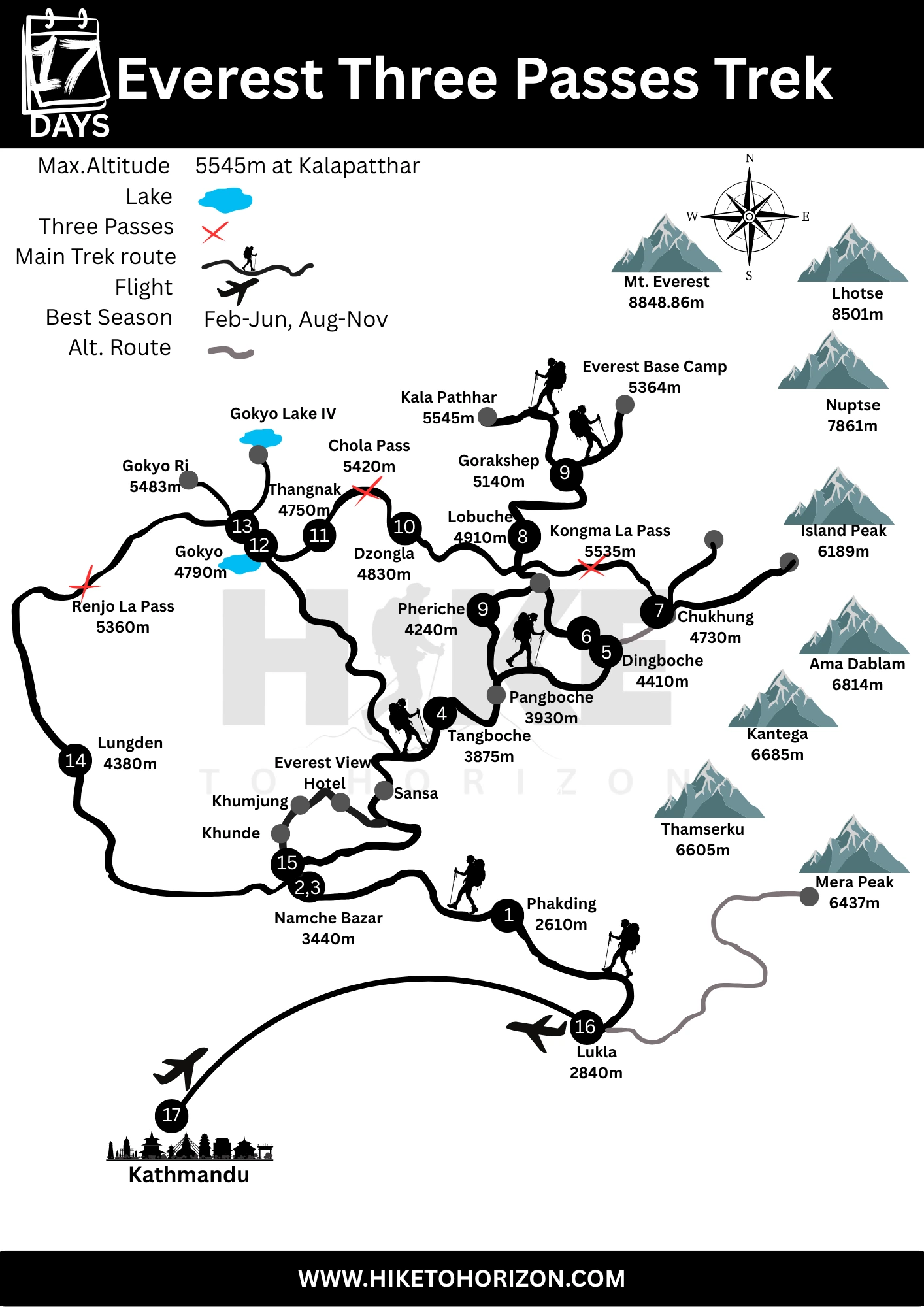
The Everest Three Pass Trek is regarded as one of the most adventurous and rewarding trekking experiences. This trek is a challenging route that takes trekkers beyond the traditional Everest Base Camp trail. Everest Three High Pass Trek takes trekkers across three high mountain passes: Kongma La(5,535 m), Cho La(5,420), and Renjo La(5,360). This trail offers an exceptional combination of natural beauty and high-altitude adventure.
Unlike the standard Everest Base Camp Trek, the Three High Pass Trek explores a wider area of the Khumbu region, allowing trekkers to experience diverse landscapes, alpine valleys, and rugged mountain terrain. Along the way, trekkers can witness the spectacular views of some of the world’s highest peaks, including Mount Everest, Lhotse, Makalu, and Cho Oyu.
The journey also provides opportunities to visit important destinations such as Everest Base Camp, Kala Patthar, Gokyo Lakes, and the Ngozumpa Glacier. The trek also offers a unique insight into the culture and tradition of the local communities.
Due to its high elevations and rough terrain, the Everest Three High Pass Trek is best suited for trekkers with good physical fitness and previous hiking experience. Proper acclimatization, preparation, and determination are essential for a successful and comfortable journey. For those seeking a complete Everest region adventure, the Three Pass Trek delivers an unforgettable experience filled with breathtaking landscapes, challenging terrain, and lasting memories.
Tribhuvan International Airport (Google Map)
Lukla: 2,840 meters
Phakding: 2,610 meters
Trek Duration: 3–4 hours
Distance: Approximately 8 km / 5 miles
Accommodation: Tea House
Your adventure begins with a mountain flight from Kathmandu to Lukla, one of the world’s most thrilling airports. The flight usually takes around 25-30 minutes and offers spectacular aerial views of the Himalayas.
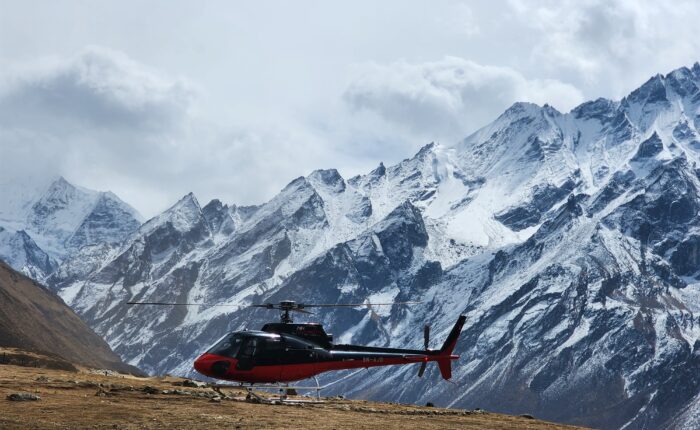
You can also hire a shared helicopter flight from Kathmandu to Lukla for around $550 per person, with 5 people able to travel at the same time. And a charter or private helicopter costs around $ 3,000 USD.
Upon arrival at Lukla Airport, we have breakfast and provide you with the permits required, then start our trek to Phakding. The trek is short but enjoyable as you get to cross through local communities and suspension bridges.
Phakding: 2,610 meters
Namche Bazaar: 3,440 meters
Trek Duration: 6–7 hours
Distance: Approximately 11 km / 6.8 miles
Accommodation: Tea House
Today’s trail follows the Dudh Koshi River towards the North, passing many suspension bridges, including the Hillary Suspension Bridge. After entering Sagarmatha National Park, a challenging uphill climb leads to Namche Bazaar, the vibrant Sherpa capital of the Khumbu region.
If the weather is clear, you can catch the first glimpse of Mount Everest along the ascent.
Altitude: 3,440 meters
Acclimatization is crucial for a comfortable high-altitude trek. Rather than resting completely, you’ll take a short hike to the Everest Hotel, located at an altitude of approximately 3,880 meters (12,730 feet) above sea level on the Syangboche ridge above Namche Bazaar.
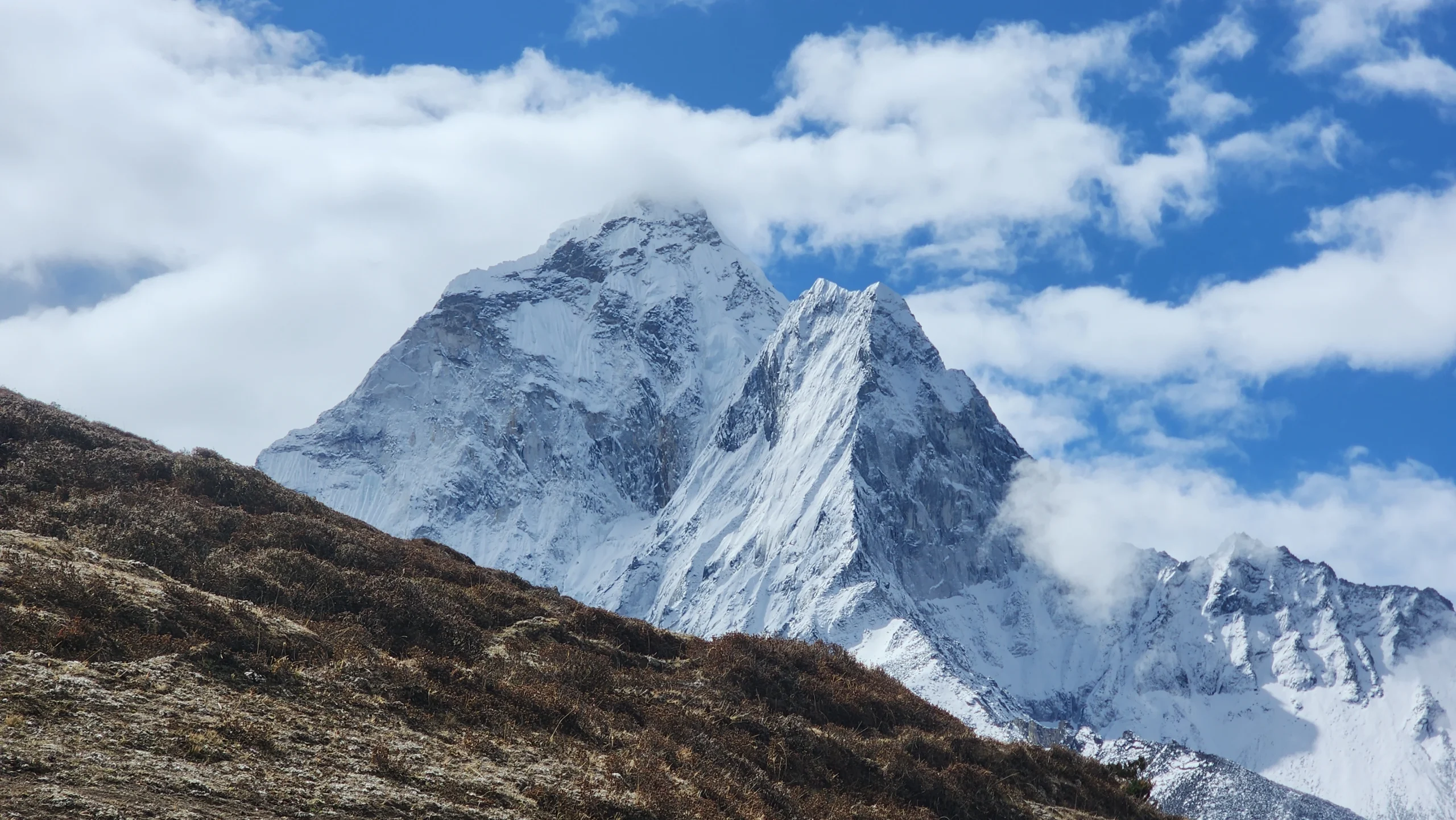
The viewpoint provides magnificent panoramas of Everest, Lhotse, Ama Dablam, and Thamserku. After exploring Khumjung and Khunde villages, return to Namche for the night.
Namche Bazaar: 3,440 meters
Tengboche: 3,875 meters
Trek Duration: 5–6 hours
Distance: Approximately 10 km / 6.2 miles
Accommodation: Tea House
The trail contours high above the Dudh Koshi Valley with breathtaking mountain views throughout the journey. After descending to Phunki Tenga, a steady climb leads to Tengboche Monastery, the spiritual center of the Khumbu region. Most trekkers arrive in time to witness the evening prayer ceremony. Day 4 ends with a comfortable overnight stay in Tengboche, surrounded by the majestic peaks of the Everest region.
Tengboche: 3,875 meters
Dingboche: 4,410 meters
Trek Duration: 5–6 hours
Distance: Approximately 11 km / 6.8 miles
Accommodation: Tea House
Today’s route descends through the rhododendron forests and crosses the Imja Khola River. As you gain elevation, the landscape transforms into an alpine environment with fewer trees and expansive mountain views.
Dingboche is surrounded by stone-walled fields and offers outstanding views of Ama Dablam. Dingboche is also known as the gateway to Everest Base Camp and Kongma La Pass. Dingboche is a significant hub, with the trail to Island Peak branching off from here toward Chhukung and Imja Valley.
Altitude: 4,410 meters
A second acclimatization day in the trek, which significantly improves your chance of safely crossing the three passes later in the trek. Most trekkers hike to Nagarjun peak or nearby viewpoints above Dingboche.
These hikes provide exceptional views of Makalu, Lhotse, Ama Dablam, and the Imja Valley.
Dingboche: 4,410 meters
Chhukung: 4,730 meters
Trek Duration: 3–4 hours
Distance: Approximately 5 km / 3.1 miles
Accommodation: Tea House
The route follows a gradual ascent through the upper Imja Valley. Chhukung is the gateway to Kongma La Pass and offers stunning views of Island Peak, Lhotse, and Nuptse.
This is a relatively short trek day designed to prepare you for tomorrow’s challenging pass.
Chhukung: 4,730 meters
Kongma La Pass: 5,535 meters
Lobuche: 4,910 meters
Trek Duration: 8–10 hours
Distance: Approximately 12 km / 7.5 miles
Accommodation: Tea House
One of the most demanding days,y both physically and mentally, begins with a steep ascent toward Kongma La Pass, the first pass of the three-pass trek. The trail crosses rocky terrain and glacial landscapes before reaching the highest point, i.e., located at an elevation of 5,535 meters (18,159 feet), of the three passes.
From the summit, spectacular views extend across the Khumbu Glacier and surrounding Himalayan peaks. After witnessing the mesmerizing scenery of the Khumbu region, carefully descend to Lobuche.
Lobuche: 4,910 meters
Gorakshep: 5,140 meters
Everest Base Camp: 5,364 meters
Trek Duration: 7-8 hours
Distance: Approximately 15 km/ 9.3 miles
Accommodation: Tea House
Following the path on the edge of Khumbu Glacier, you trek to Gorakshep and continue onward to Everest Camp. Standing at the foot of the world’s highest mountain is a rewarding and lifetime achievement for most trekkers.
At the end of the day, return to Gorakshep for the night.
Kala Patthar: 5,545 meters
Dzongla: 4,830 meters
Trek Duration: 7-8 hours
Distance: Approximately 12 km/ 7.5 miles
Accommodation: Tea House
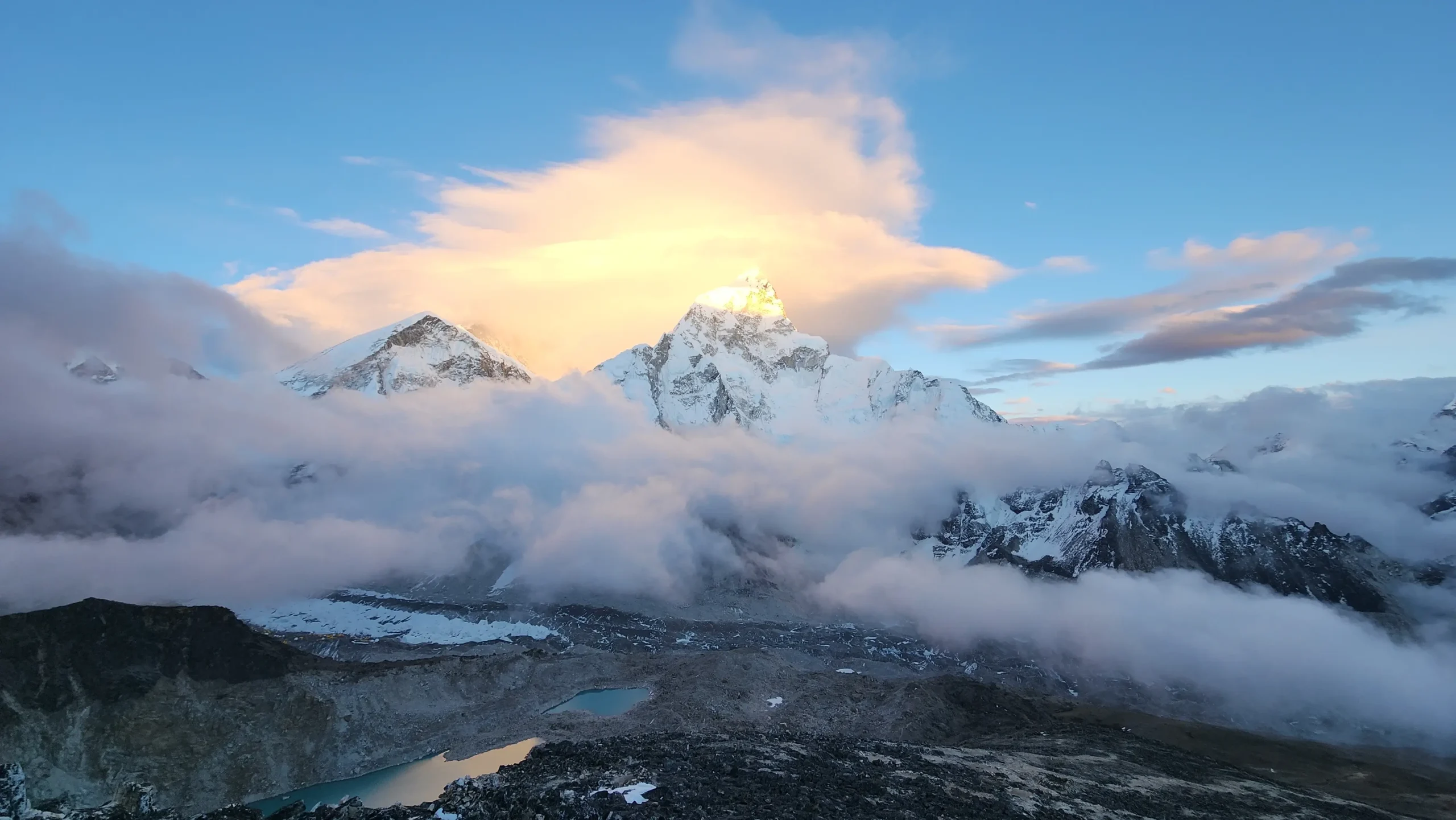
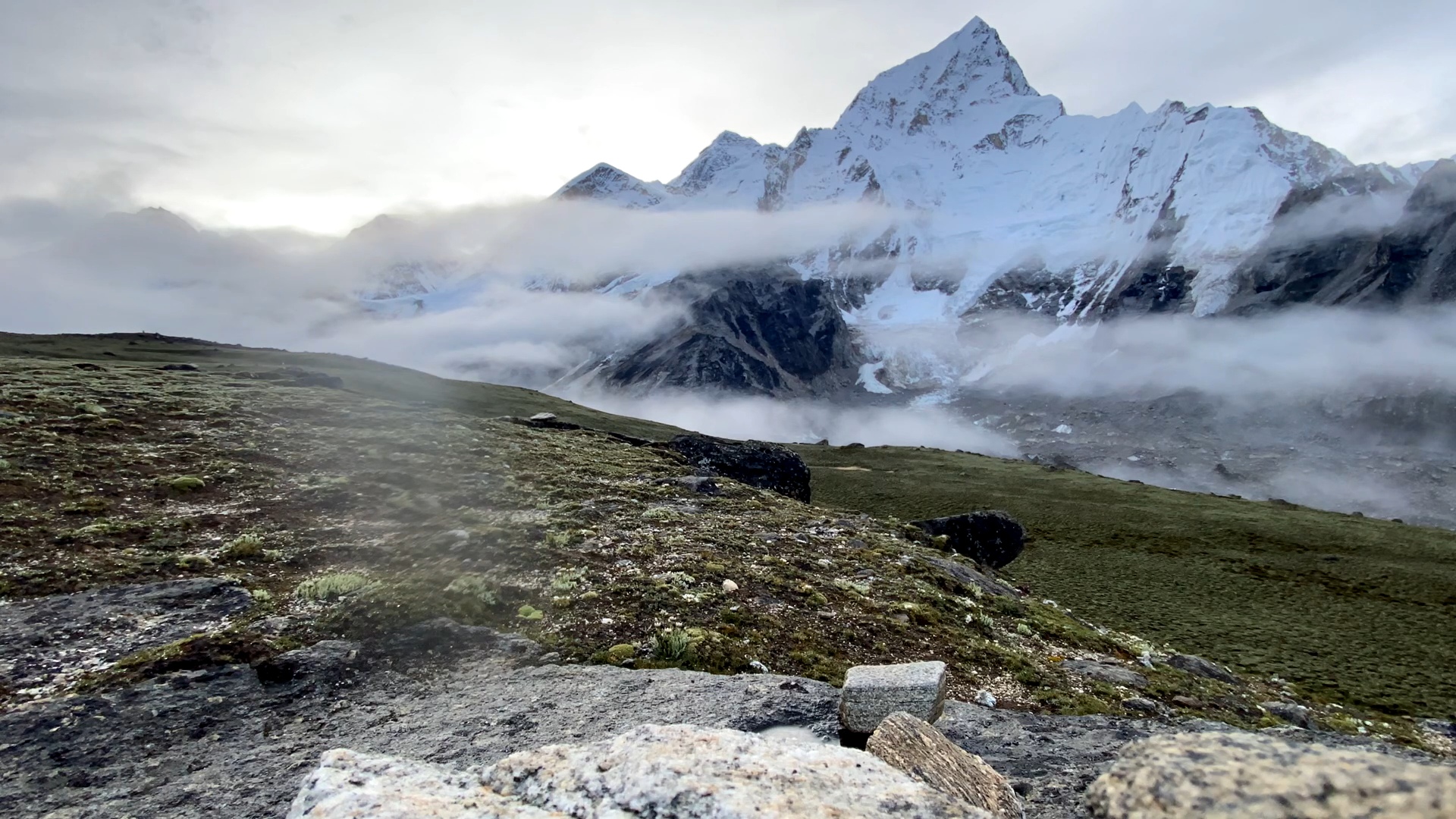
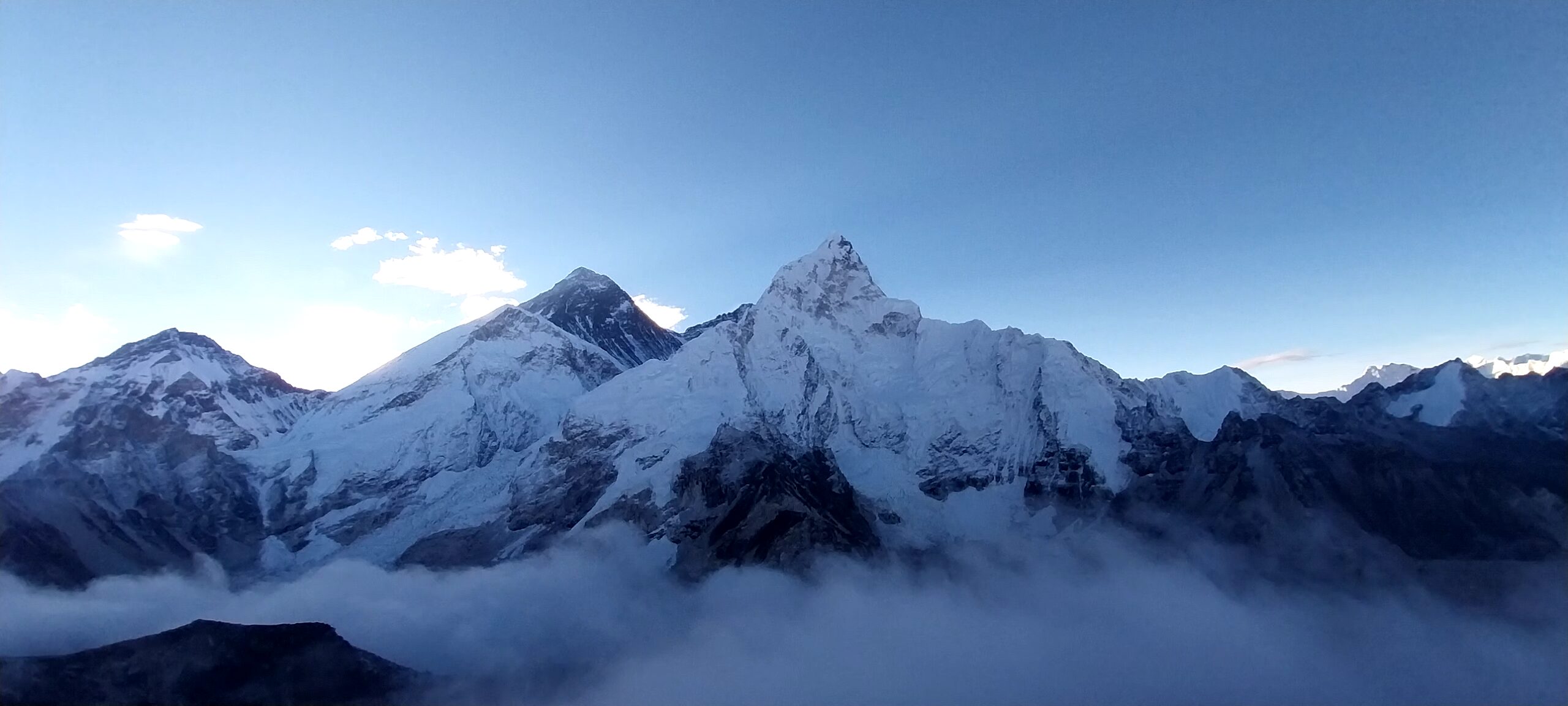
Sunrise view from Kalapatthar is what most trekkers reward themselves with after setting foot on the base of the world’s highest peak. As dawn breaks, Everest, Nuptse, and Pumori glow with golden light, creating a truly unforgettable Himalayan panorama. After descending to Gorakshep, continue toward Dzongla for the stay.
Dzongla: 4,830 meters
Cho La Pass: 5,420 meters
Thangnak: 4,700 meters
Trek Duration: 7-9 hours
Distance: Approximately 10 km/ 6.2 miles
Accommodation: Tea House
Today’s crossing of Cho La Pass is physically demanding but highly rewarding. The trail gradually ascends over rocky terrain toward Cho La Pass, the second pass of the three-pass trek.
After spending some time at the pass, the trail descends across glacial moraine and rocky paths toward the remote settlement of Thangnak. The day ends with an overnight stay at Thangnak, allowing trekkers to rest and recover.
Thangnak: 4,700 meters
Gokyo: 4,790 meters
Trek Duration: 3-4 hours
Distance: 4 km/ 2.5 miles
Accommodation: Tea House
After the demanding crossing of Cho La Pass, today’s trek is relatively shorter. The route traverses sections of the vast Ngozumpa Glacier before gradually ascending toward the stunning Gokyo Valley.
As the trail approaches Gokyo, crystal-clear turquoise lakes appear against a backdrop of snow-capped mountains, creating a beautiful landscape of the Himalayas. The day concludes with an overnight stay at Gokyo, surrounded by the breathtaking beauty of Gokyo Lakes.
Gokyo: 4,790 meters
Gokyo Ri: 5,483 meters
Trek Duration: 4-5 hours
Distance:4 km/ 2.5 miles
Accommodation: Tea House
An early morning ascent to Gokyo Ri rewards a spectacular panorama in the Everest region. From the top of Gokyo Ri, we can encompass Everest, Lhotse, Makalu, Cho Oyu, and the entire chain of Gokyo Lakes stretching across the valley below.
Most trekkers consider the views from Gokyo Ri more impressive than Kala Patthar due to the wider range of views of the Himalayas and stunning turquoise lakes.
After descending back to Gokyo, the day ends with another overnight stay at Gokyo.
Gokyo: 4,790 meters
Renjo La Pass: 5,360 meters
Lungden: 4,380 meters
Trek Duration: 7-8 hours
Distance: 11 km/ 6.8 miles
Accommodation: Tea House
Today’s journey brings the final crossing of the Everest Three Pass Trek. The ascent to Renjo La Pass is steep but incredibly rewarding. After enjoying the majestic scenery at the finest viewpoint, the trail descends into the less-traveled Bhote Khosi Valley toward Lungden. The peaceful atmosphere and fewer trekkers provide a refreshing contrast to the busier Everest Base Camp Trek. The day concludes with an overnight stay at Lungden.
Lungden: 4,380 meters
Namche Bazaar: 3,440 meters
Trek Duration: 6-7 hours
Distance: 16 km/ 10 miles
Accommodation: Tea House
The trail descends through the ancient trade routes followed by Tibetan merchants. Along the way, trekkers pass through the historic village of Thame, known for its connection to many famous Sherpa mountaineers and their rich cultural heritage.
As the trail rejoins with the main Everest route, the familiar sights start to kick in. The day ends with an overnight stay at Namche Bazaar.
Namche Bazaar: 3,440 meters
Lukla: 2,840 meters
Trek Duration: 6-7hours
Distance: 18 km/ 11.2 miles
Accommodation: Tea House
The final trekking day follows the Dudh Koshi River with the familiar sights. The route retraces the path through Monjo and Phakding before reaching Lukla.
Trekkers often celebrate with guides and porters in the evening as a sense of achievement after completing one of Nepal’s most challenging trekking circuits.
The day concludes with an overnight stay at Lukla.
Lukla: 2,840 meters
Kathmandu: 1,400 meters
Flight Duration: 25-30 minutes
After breakfast, board an early morning flight from Lukla to Kathmandu. Try to go in first in line to stay on the left side of the aircraft to enjoy the final aerial views of the Himalayas, which accompanied you throughout the journey.